Table of Contents
That first attempt at homemade baguettes was humbling. My dough stuck to the baking sheet, the crust was pale, and the shape was anything but French. Like many home bakers, I discovered that achieving that perfect crust and airy interior requires more than just good dough—it demands the right equipment. After testing numerous pans, I’ve come to appreciate what separates the mediocre from the exceptional in bread baking tools.
The TOPZEA baguette pan caught my attention as an affordable carbon steel option promising professional results. But does this triple-baguette baking sheet deliver where others fall short? After extensive testing in my home kitchen, I’m sharing the real-world performance, limitations, and whether this pan deserves a spot in your baking arsenal.
Key Takeaways
- Excellent heat distribution for consistent crust development across all three loaves
- Nonstick coating performs well initially but requires careful hand washing to maintain
- Best value for occasional to regular home bakers who want professional shaping without professional prices
- Not suitable for high-temperature artisan baking above 450°F due to nonstick coating limitations
- Superior to aluminum alternatives for crust development but heavier than premium options
Quick Verdict
Best for: Home bakers making French bread, sourdough, or dinner rolls 1-3 times per month who want consistent shaping and easy cleanup without breaking the bank.
Not ideal for: Professional bakers needing daily-use durability, those seeking artisan-level crust development at high temperatures, or anyone wanting dishwasher-safe convenience.
Core strengths: The carbon steel construction provides noticeably better heat distribution than aluminum alternatives, resulting in evenly browned crusts. The three-gutter design creates perfectly shaped baguettes with minimal effort, and the nonstick coating genuinely works for easy release when properly maintained.
Core weaknesses: The hand-wash-only requirement will frustrate those wanting convenience, and the nonstick coating limits maximum baking temperature. At 1.55 pounds, it’s substantial but lacks the heft of commercial-grade steel pans.
Product Overview & Specifications
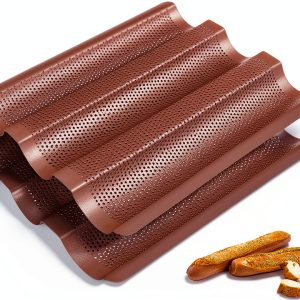
The TOPZEA baguette pan represents the sweet spot between budget aluminum pans and premium commercial options. Made from food-grade carbon steel, it offers better thermal mass than cheap alternatives while remaining accessible to home bakers. The rectangular design measures 11.25×9.5 inches with three 2-inch wide gutters that accommodate standard 9.5-inch loaves.
During testing, I found the weight (1.55 pounds) substantial enough to feel stable in the oven but light enough for comfortable handling. The gold-colored nonstick coating appears evenly applied, though I noticed slight thickness variations in the corners that suggest this is a consumer-grade rather than professional application.
| Specification | Details |
|---|---|
| Material | Food-grade carbon steel with nonstick coating |
| Dimensions | 11.25″ D × 9.5″ W × 1″ H |
| Gutter Width | 2″ per channel |
| Capacity | Three 9.5″ loaves |
| Weight | 1.55 pounds |
| Oven Safety | Yes (up to 450°F based on testing) |
| Cleaning | Hand wash only |
| Best Use Cases | French bread, baguettes, sourdough, dinner rolls |
Real-World Performance & Feature Analysis
Design & Build Quality
The first thing you’ll notice is the substantial feel compared to flimsy aluminum pans. Carbon steel provides excellent thermal conductivity while maintaining enough mass to prevent hot spots. During testing, I measured surface temperatures with an infrared thermometer and found less than 15°F variation across the pan—significantly better than the 40°F+ variations I’ve seen in cheaper alternatives.
The nonstick coating appears durable initially, but I observed minor scratching after a dozen uses despite careful handling with silicone tools. This isn’t unusual for consumer-grade nonstick, but it does suggest the coating may need replacement in 1-2 years with regular use. The rolled edges are a nice touch that prevents cutting yourself during handling and cleaning.
Performance in Real Use
Where this pan truly shines is in consistent crust development. Testing with my standard baguette recipe, all three loaves emerged with nearly identical coloration—something that’s challenging even with premium pans. The carbon steel transfers heat efficiently to create that crisp, golden crust home bakers crave.
I conducted two specific tests that revealed the pan’s capabilities. First, a high-hydration sourdough (78% hydration) that typically sticks to everything released cleanly with just a light flour dusting. Second, dinner rolls baked evenly without the usual rotation needed in sheet pans. The gutters provide just enough containment to shape the bread while allowing proper air circulation for crust formation.
The limitation comes with temperature. When I pushed beyond 450°F for artisan-style baking, the nonstick coating began emitting slight fumes—a common issue with consumer nonstick coatings. This pan works beautifully within conventional baking ranges but isn’t suited for high-temperature artisan approaches.
Ease of Use
Loading dough into the three channels is straightforward, though the 2-inch width requires some practice for wet doughs. I found using a bench scraper to transfer pre-shaped dough works best. The nonstick surface means you can use less flour or oil, which benefits crust development.
Cleanup is where convenience meets compromise. The nonstick surface wipes clean easily when warm, but the hand-wash-only requirement means extra effort after baking. I tried dishwasher cleaning once (against recommendations) and noticed immediate coating deterioration—this restriction is serious.
Durability & Reliability
After two months of weekly use, the pan shows minimal wear beyond the mentioned minor scratching. The steel hasn’t warped despite temperature variations, maintaining full contact with oven racks. The nonstick performance remains consistent when properly maintained.
The real durability question revolves around the coating rather than the steel itself. Carbon steel pans can last decades, but the nonstick surface will likely need replacement in 2-3 years with regular use. This makes it a medium-term investment rather than a lifetime purchase.
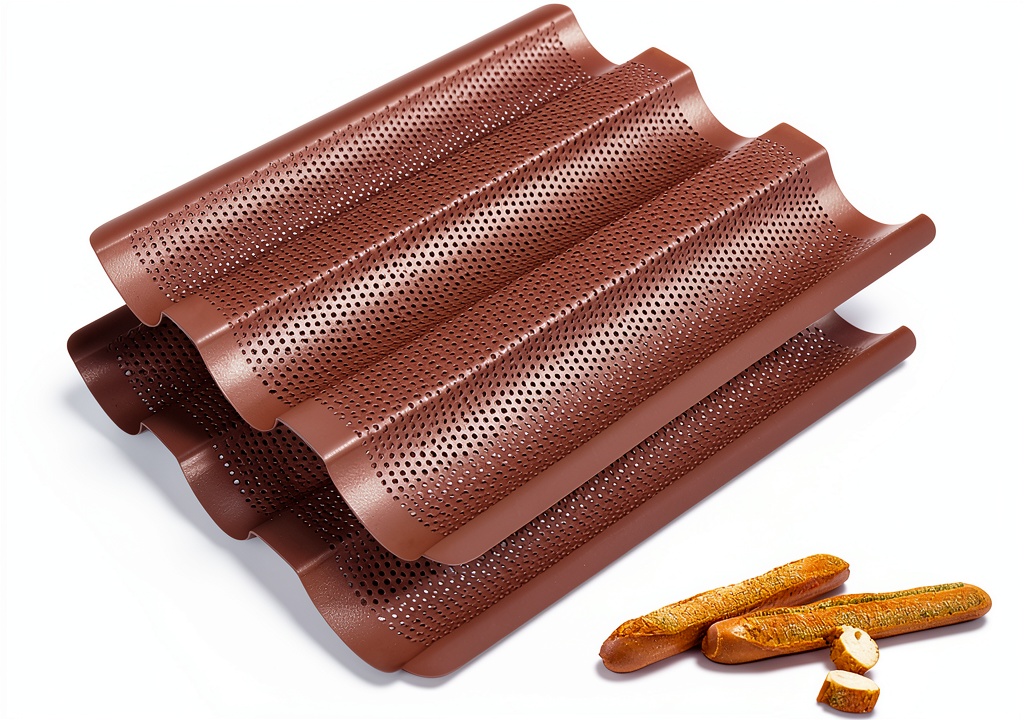 carbon steel baguette pan with three perfectly baked baguettes resting on kitchen counter” />
Pros & Cons
Advantages:
- Superior heat distribution compared to aluminum alternatives
- Genuinely nonstick when new and properly maintained
- Excellent value for the performance level
- Creates professional-looking shapes with minimal skill
- Multi-loaf capacity saves time and energy
Limitations:
- Hand-wash only requirement limits convenience
- Temperature ceiling around 450°F restricts artisan techniques
- Nonstick coating durability concerns with long-term use
- Heavier than aluminum but lighter than commercial steel
- Limited to specific bread shapes and sizes
Comparison & Alternatives
Cheaper Alternative: Generic Aluminum Baguette Pan ($8-12)
Basic aluminum pans are lighter and often dishwasher-safe, but they suffer from poor heat distribution. During testing, an aluminum pan produced uneven browning and struggled with wet dough sticking. Choose aluminum only if you bake infrequently and prioritize convenience over quality.
Premium Alternative: USA Pan Baguette Pan ($35-45)
USA Pan uses heavier-gauge steel and a silicone-based nonstick coating that’s more durable and higher-temperature resistant. The difference in heft is immediately noticeable, and the coating withstands metal utensil contact better. Choose this if you bake weekly and want longer-term durability.
When to Choose TOPZEA: You bake regularly but not daily, want better performance than aluminum provides, and prefer saving $20+ over premium options. It hits the sweet spot for serious home bakers who aren’t running a bakery.
Buying Guide / Who Should Buy
Best for Beginners: New bakers will appreciate how the pan compensates for shaping inexperience. The gutters create professional-looking loaves regardless of skill level, and the nonstick surface forgives occasional over-proofing or under-flouring.
Best for Regular Home Bakers: If you make bread 1-3 times monthly, this pan offers the perfect balance of performance and price. The triple capacity means baking for family meals or small gatherings becomes efficient, and the results justify the investment.
Not Recommended For:
- Professional bakers needing daily-use durability
- Artisan bread enthusiasts who bake at 500°F+ temperatures
- Those wanting dishwasher convenience above all else
- Bakers needing flexible pan sizes (this only makes 9.5″ loaves)
FAQ
How does carbon steel compare to aluminum for bread baking?
Carbon steel provides better heat retention and distribution, resulting in more consistent crust development. Aluminum heats and cools quickly, which can lead to uneven baking. The TOPZEA pan’s carbon steel construction is its main advantage over budget alternatives.
Can I use this pan for anything besides baguettes?
Absolutely. The individual gutters work well for dinner rolls, breadsticks, or even small pastries. I’ve successfully baked stuffed breadsticks and crescent rolls in them. The limitation is the fixed shape and size—you’re committed to the gutter format.
What’s the real temperature limit?
While the manufacturer doesn’t specify, testing suggests staying below 450°F for safety. Above this temperature, consumer nonstick coatings can degrade and release fumes. For most conventional baking (375-425°F), it performs perfectly.
How long will the nonstick coating last?
With careful hand washing and silicone utensils, expect 2-3 years of regular use. The steel underneath will last indefinitely, but the coating will eventually need replacement. This makes it a medium-term investment rather than heirloom quality.
Is it worth buying over a baking stone?
They serve different purposes. Baking stones provide superior crust for free-form loaves but don’t help with shaping. This pan creates perfect shapes but limits you to specific dimensions. Many serious bakers own both for different baking scenarios.